Aanshbot: Turning Discovery Conversations Into Decision Intelligence
Most teams can search transcripts. Very few can query patterns at decision time. Aanshbot is built to close that gap.
The Discovery Data Problem
Most teams do discovery work consistently. The problem is that discovery usually does not compound.
Calls are recorded, notes are shared, and transcripts are archived. But when someone needs to make a real decision, teams still struggle to answer:
- What should we ask next right now?
- Which assumptions are still unproven?
- Where does this workflow usually break?
- Which risk shows up too late?
Discovery data exists, but the decision signal is hard to retrieve when it matters.
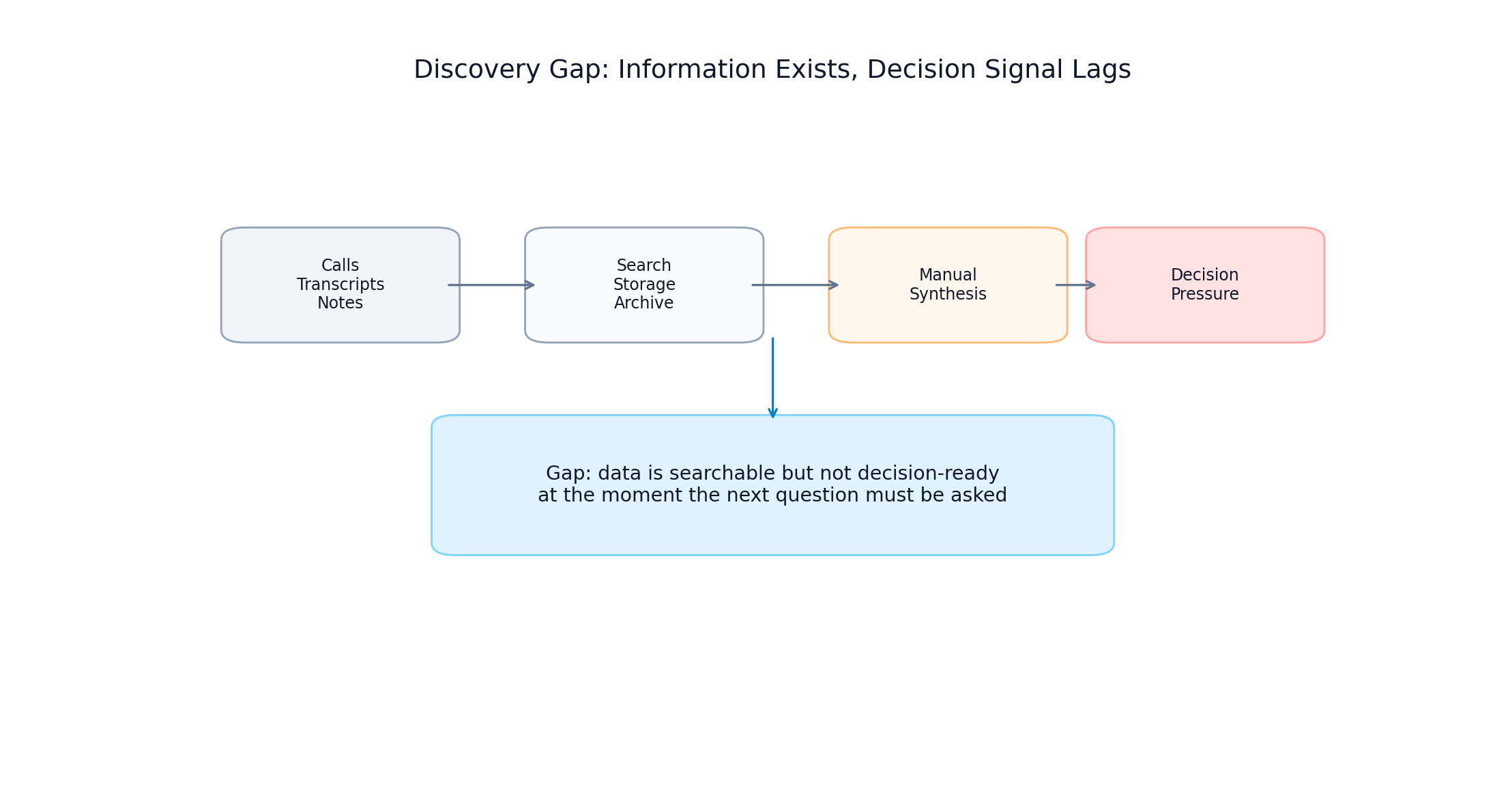 Discovery archive to decision-signal gap flow
FIGURE 1: Discovery information typically accumulates faster than it becomes decision-ready.
What Aanshbot Actually Does
Aanshbot is a role-aware discovery question coach built by Briefcase AI. It does not optimize for generic chat. It optimizes for one output: stronger next questions grounded in curated evidence.
At a high level, it takes intake context plus corpus evidence and returns coaching that can be used immediately in live interviews and discovery conversations.
The design center is practical: improve the next minute of a conversation, not produce a long generic answer.
The Response Contract in Plain English
Every response follows the same decision-shaped contract:
- A short synthesis of the current discovery moment.
- Exactly three question buckets:
problem,workflow, andrisk. - For each question: why it matters, what to listen for, and confidence context.
- Follow-up paths, contradiction flags, and role-gated evidence context.
This structure is intentional. It keeps outputs comparable across sessions, easier to evaluate, and easier to reuse in playbooks.
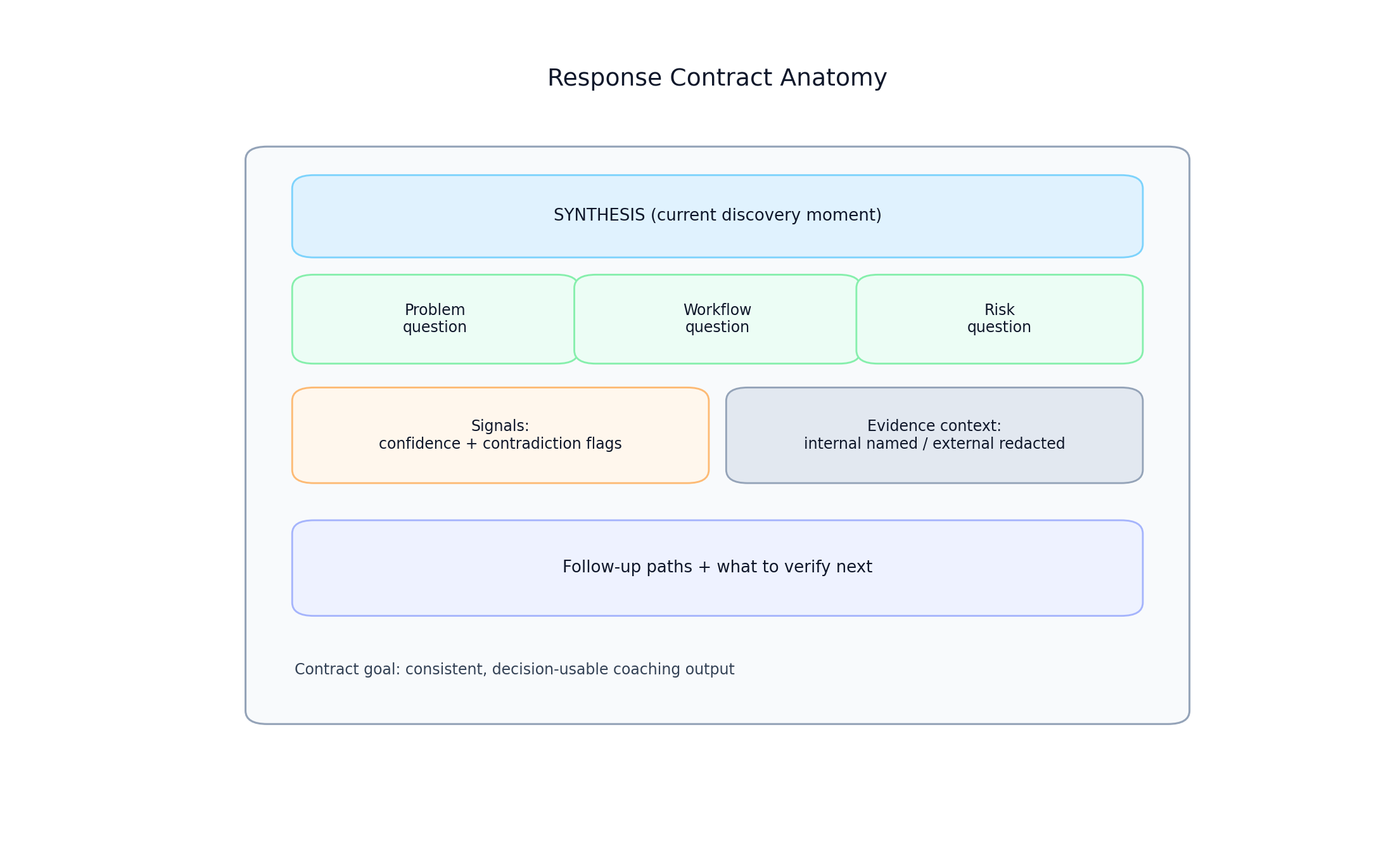 Annotated response contract anatomy
FIGURE 2: Aanshbot response anatomy: synthesis, three question buckets, signal indicators, and role-aware evidence context.
Three Modes for Real Interview Work
Aanshbot supports three workflows on top of the same retrieval and policy foundation:
Chat: multi-turn discovery coaching with confidence and contradiction context.Answer Analyzer: paste an interviewee response and get next questions, missing-info gaps, contradictions, and verification guidance.Interview Plan: generate opening, ten-question plan, fallback paths, and close criteria.
The modes are designed to match how teams actually operate before, during, and after interviews.
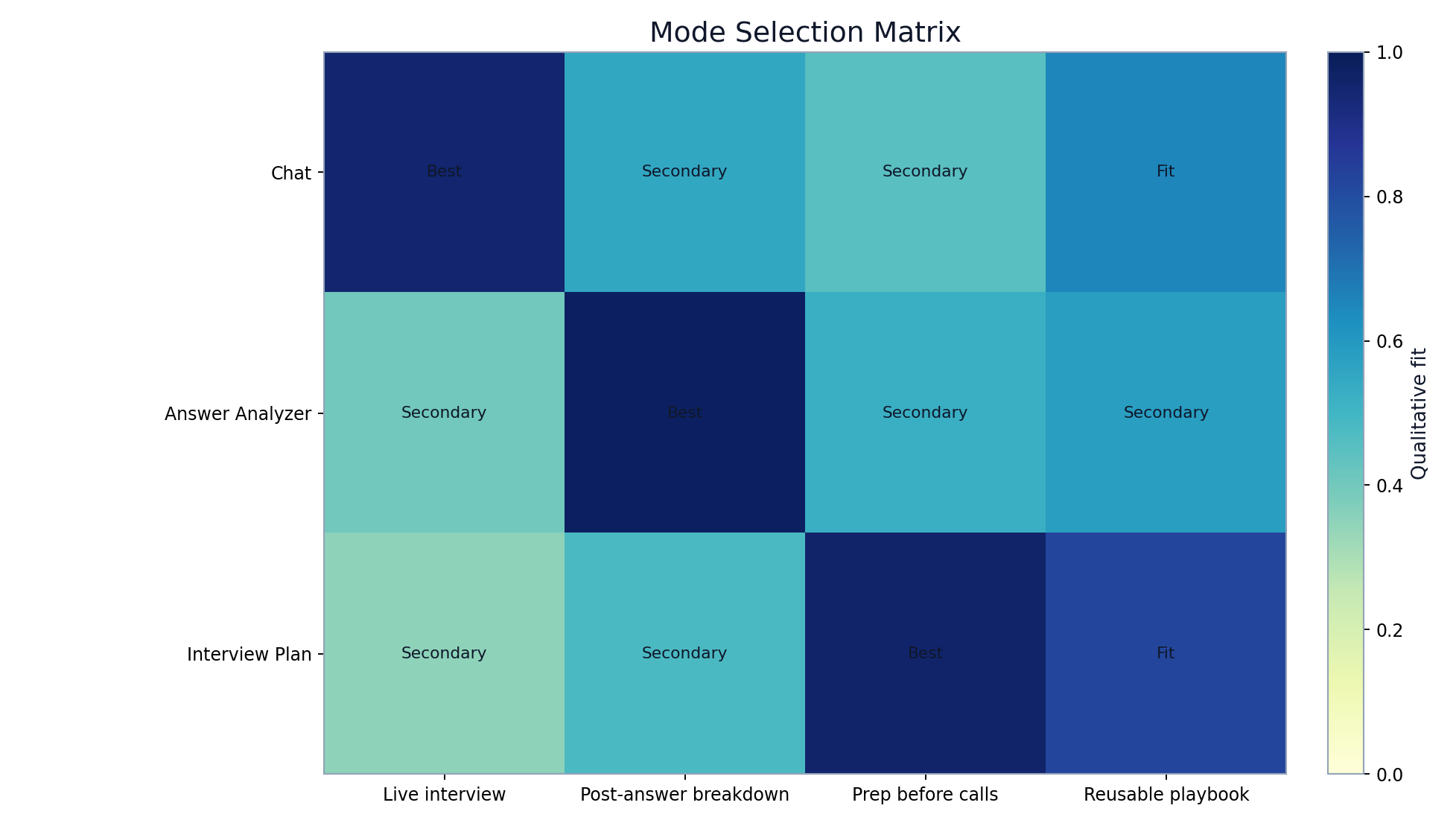 Mode selection matrix for Chat, Answer Analyzer, and Interview Plan
FIGURE 3: Mode matrix for choosing the right workflow based on discovery phase and operator intent.
Trust and Privacy by Default
Aanshbot uses one app for internal and external users, with different evidence visibility and safety handling by role.
- Internal/admin users can inspect named evidence where policy allows.
- External users receive anonymized synthesis and redacted evidence outputs.
If leakage is detected in external mode, the system tightens output policy before returning content. If leakage still persists, it falls back to safe coaching prompts.
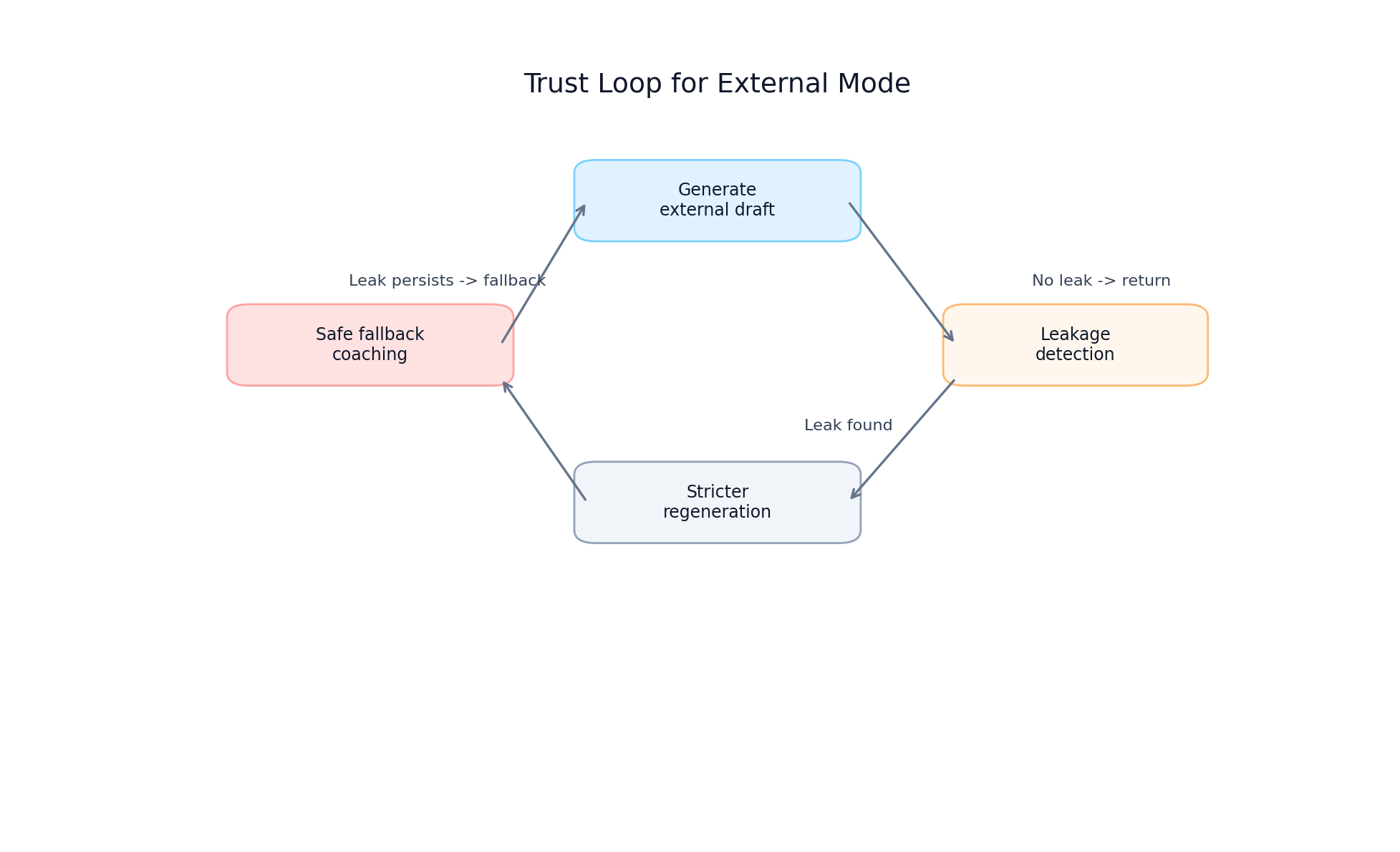 Trust and safety loop diagram for external mode
FIGURE 4: Role-aware trust loop: detect leakage, regenerate under stricter policy, then safe fallback if needed.
Why This Compounds Over Time
Aanshbot is built so discovery quality improves with use, not just session by session.
- Teams can save and reuse high-performing playbooks.
- Corpus version diffs expose what changed and what question strategy should shift.
- Feedback signals capture whether questions were useful and used.
Over time, this turns discovery from one-off effort into reusable operating memory.
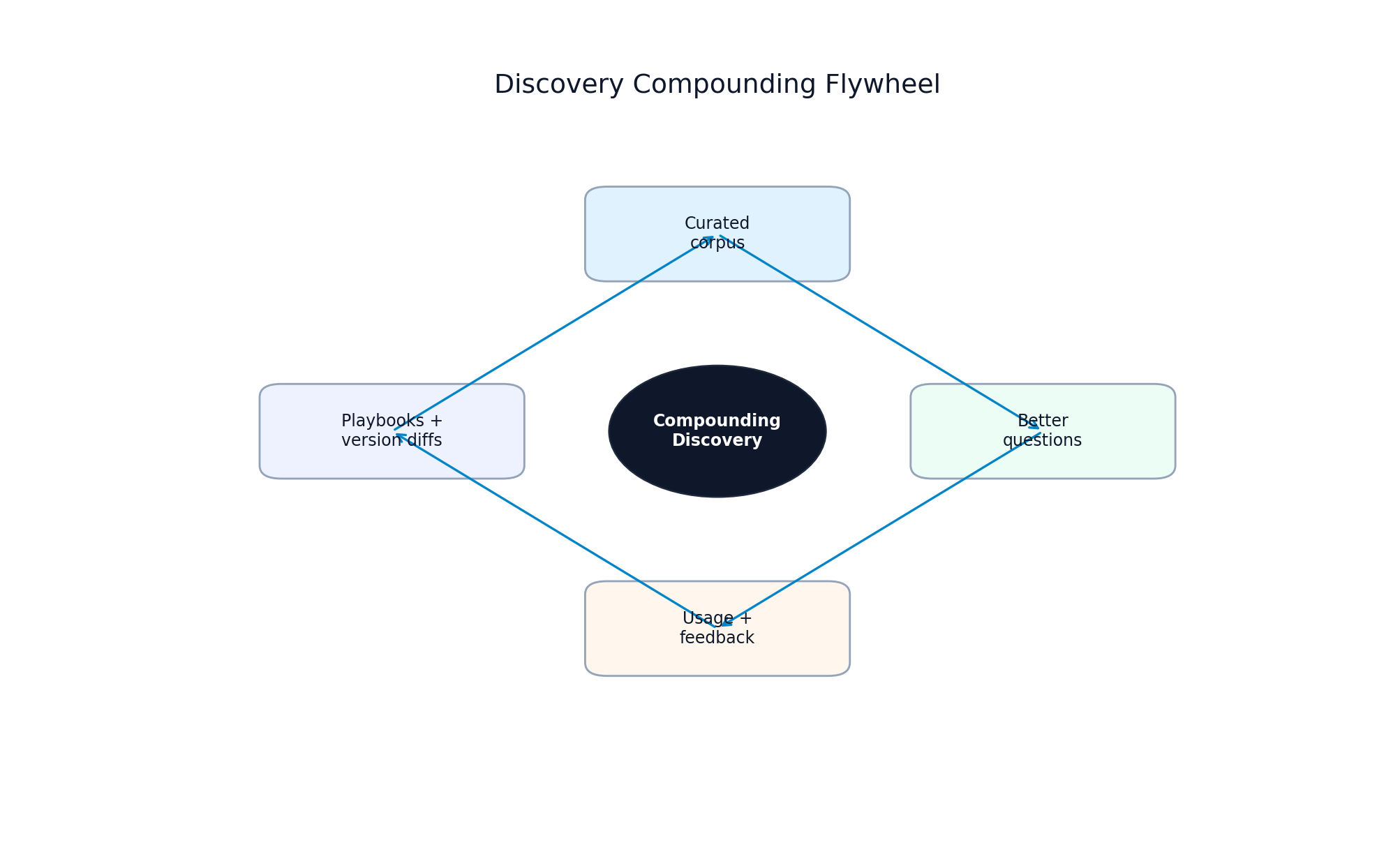 Discovery compounding flywheel
FIGURE 5: Discovery compounding loop: evidence, coaching, usage, feedback, and playbook refinement.
What Aanshbot Is Not
Aanshbot is intentionally scoped in v1.
- It is not automatic transcript sync.
- It is not a generic note-taking assistant.
- It is not a single “best answer” engine.
It is a system for producing better next questions under evidence and trust constraints.
Who Should Use It First
Aanshbot is a strong fit for teams running high-frequency discovery across product, sales, and research where decisions depend on consistent synthesis quality.
If your team already has discovery artifacts but still struggles to convert them into reliable next-question guidance, Aanshbot is built for that operating gap.
If this sounds like your current bottleneck, run a pilot at askaansh.briefcaseai.org against one active discovery track.
Related Reading
- How We Built Aanshbot: A Practical Technical Deep Dive
- The Escalation Tax
- AI Observability Tools: Which One Actually Fits Your Problem?
Want fewer escalations? See a live trace.
See Briefcase on your stack
Reduce escalations: Catch issues before they hit production with comprehensive observability
Auditability & replay: Complete trace capture for debugging and compliance